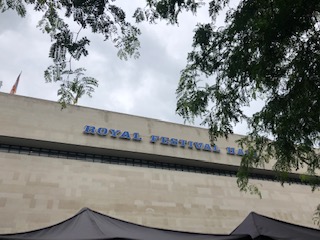
The Festival Hall was almost something I missed because of it’s plain exterior amongst an area of exciting things to do and see. It has a dry looking appearance because it is only a grey structure with the title of the building on it.
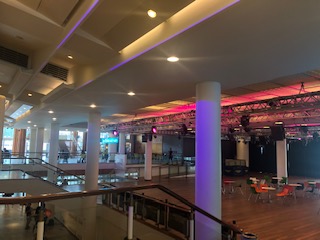
However, the building inside is much more exciting than it’s dry outside. I did not know what to make of all the things going on inside the building or what it’s purpose was. Then I realized that that is exactly what it is for-to be a multipurpose establishment. Adrian Forty’s reading mentions how we can not tell what this building’s historical significance is by looking at the building itself or it’s architecture. We should look at the experiences that have occurred in the building and how they relate to what goes on now. It was lovely to see families eating dinner in one part of the building and to look down and see people dancing the tango in another. This building also hosts several events and concerts. The purposes of the building keep most of what originally happened here-concerts and dancing. The advertisements for their events line the building walls. However, the interior the building has a very modern feel. There was neon lights amongst colorful chairs and tables.
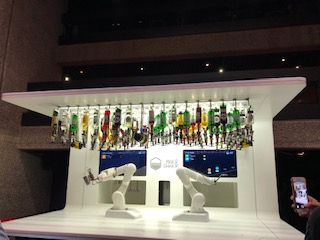
This building had multiple floors that can be used for any purpose or event. I got the same feeling when I visited the Barbican Center-that each floor was so different from the next. The Barbican Center was not what I expected it to be nor could I tell from the outside what it would be either. Again, the exterior is very plain and average but the inside had some of the most interesting things that I have never seen. The modern technology on the first level was very fascinating and fun to experience. There were two large screens when we walked in that mimicked people’s movements with virtual designs. If someone moved their arms around, then the design on the screen would move with the person. I was surprised when that was the first thing I saw when I entered the building because my impression from the building’s exterior did not match with what was inside. The exterior of the building led me to think it would be offices or maybe apartments inside, not something completely amazing that I had never seen before. Further along the first floor there was a robot bartender!
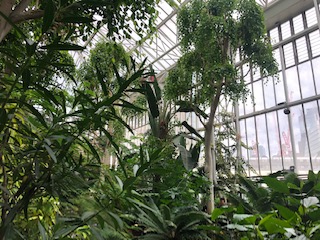
As I walked up the stairs to the next floor I expected the whole building to be exhibits of artificial intelligence or modern technology, but every floor had a different purpose or theme. One floor was a garden with ponds and tall trees indoors.
Another floor was an art gallery. I was in disbelief to know that this building was social housing. According to Tsubaki, “the gentrification of nearby inner city areas meant that the Barbican no longer appeared so different from its neighbors.” (541) This was evident in my first impression of the building because I could not tell what was special about this building from the outside or that it was even going to be a multipurpose exhibition of exciting things to see. It definitely blends in with the rest of the nicer buildings in the area and does not look like it would serve as a place for social housing. The Royal Festival Hall and the Barbican Center exemplify brutalist architecture in a modern environment. They both appear to blend in with their bland, plain exteriors but have amazing sights and experiences on the inside. However, one kept it’s original purpose of being a multipurpose building for music and events, while the other has completely changed due to it’s environment. It is interesting to look at these kinds of buildings because I did not know what to expect from outside. It was always a nice surprise to see that the inside was more entertaining than the building’s outside!
 Gabby's Blog